
I recently attended a webinar with Piera Toniolo, Dolce & Gabbana’s Global Head of Influencer Marketing, who shared how one of the world’s most iconic luxury brands approaches creator partnerships. While nonprofit budgets look nothing like those of luxury fashion brands, the strategic framework she outlined translates remarkably well to mission-driven work.
The New Creator Economy: Fewer Deals, Deeper Impact
Here’s the stat that caught my attention: 97% of CMOs are planning to spend more on influencer marketing this year, with some allocating up to a quarter of their total marketing budget to influencer engagement. But the real shift? Creators are accepting fewer brand deals and prioritizing deeper, longer-term relationships.
This actually benefits mission-driven organizations. You don’t need dozens of one-off creator posts. You need the right creators who can genuinely connect your mission to their audience and sustain the conversation over time.
Influencer Layering: The PR Approach Applied to Creators
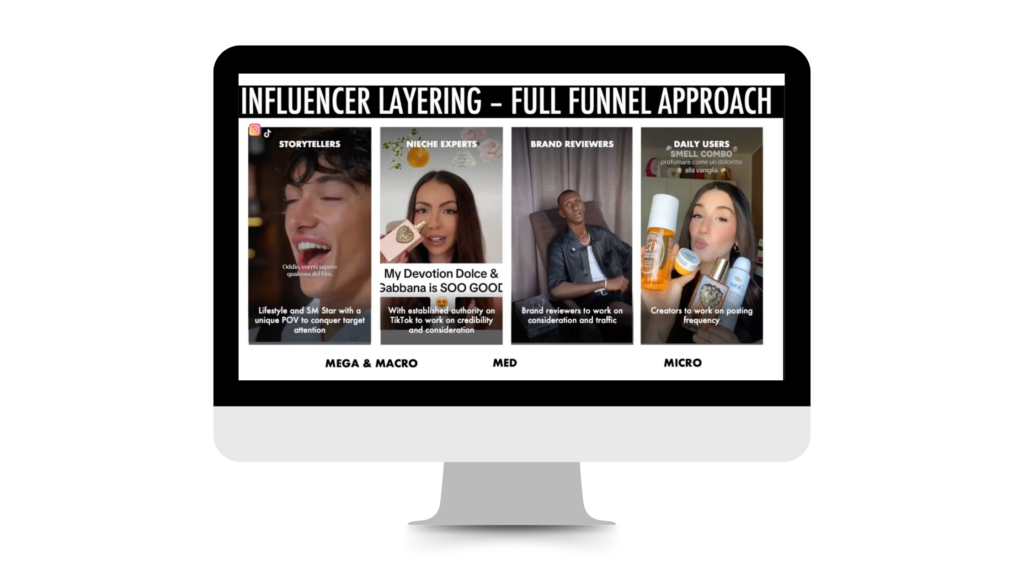
Toniolo outlined a layered, or tiered, influencer marketing strategy that sounded remarkably similar to the PR pros here at Teak Media. For Dolce & Gabanna, mega and macro influencers (100K+ followers) are storytellers who grab attention and create aspiration. They handle awareness and elevation. Mid-tier creators (10K-100K followers) are reviewers and experts who build credibility, driving consideration and deeper understanding. Micro-influencers (1K-10K followers) are daily users with highly engaged audiences who focus on conversion and action.
This is exactly how we build our media strategies.
Rather than pitching only international and national news outlets, hoping for the biggest reach possible, we implement a top down and bottom up approach, which means we layer national outlets for reach, regional media for relevance, trade publications for credibility, and hyperlocal coverage for community connection.
Mega-influencers introduce your mission to new audiences. Mid-tier creators explain why your work matters. Micro-influencers drive meaningful engagement and action. Different tiers serve different purposes, just like different media outlets.
Platform Strategy: Meeting Audiences Where They Are
D&G’s per-platform approach is simple: Instagram for awareness and elevation. TikTok for authenticity and consideration. YouTube for education and exploration. Each platform serves a distinct purpose with content designed specifically for its strengths.
Instagram might showcase galas and milestones, while TikTok could feature day-in-the-life content from staff or those served by your organization. YouTube might host longer-form storytelling about program impact. A promotional brand video will perform better on Instagram than on TikTok, where viewers expect and value organic and “raw” content. Be intentional about which platforms serve which goals, and design your content accordingly.
The Balance Between Data and Instinct
D&G looks at influencer share of voice (how much creators talk about your brand compared to how much they post about competitors), audience quality, and earned media value. Global luxury brands have the resources and infrastructure to monitor these sophisticated metrics. But they also trust their creative teams to identify cultural moments and authentic opportunities for engagement.
Most nonprofits don’t have access to that level of analytics, and that’s okay. Start with what you can reasonably track. Are you seeing meaningful interactions like saves, shares, or thoughtful comments that signal deeper connection? If you can track conversions like volunteer sign-ups, donations, or event registrations that come in through influencer campaigns, great. If you can’t, look at leading indicators like profile visits, link clicks, or DM inquiries.
The D&G lesson here is about balance. Track what you can and don’t let the absence of perfect data stop you from moving forward. Trust your team’s judgment about which creators feel right and which trending moments might align with your mission. A creator partnership might not drive immediate donations, but it could be building long-term awareness, strengthening your reputation, or reaching an entirely new audience you couldn’t access otherwise.
Create an Experience, Not Just Content
D&G sells the mystery and intrigue of Italian culture. Their influencer marketing strategy maintains luxury’s elite status while making it feel accessible. When micro-influencers share their morning ritual featuring D&G fragrance, they’re extending the brand’s storytelling without cheapening it. Relatable moments allow everyday consumers to get a glimpse into an aspirational lifestyle.
The same principle applies when nonprofits and mission-driven organizations work with creators. They are selling something intangible: a feeling, a connection, an invitation into a movement. Partner with an eco-friendly lifestyle creator to connect your environmental work to sustainable choices, a parenting influencer to frame your youth mentorship mission through raising confident kids, or a local food blogger to tell your food justice story through a community meal.
The creator gives your mission context and accessibility. D&G doesn’t ask influencers to sell perfume, they ask them to share moments of Italian-inspired beauty. Similarly, you’re asking creators to show their audience how your organization’s work fits into values and experiences their followers already care about, in a way that feels authentic, natural to their content, and true to their voice.
Luxury fashion and nonprofit communications might seem worlds apart, but the fundamentals of influential storytelling remain the same: authenticity, strategic layering, cultural relevance, and creating experiences that resonate emotionally.
