

PR and communications professionals are looking for ethical ways to use artificial intelligence and reach the right audiences. That goal set the tone at the Public Relations Society of America (PRSA) Northeast District Conference, which my colleague Jenn and I recently attended at Bentley University alongside students, communications professionals, inspiring speakers and members of PRSA chapters from across New England and New York. This year’s theme was “Our Changing World: Tech, Social & Politics.”

Here are some of the biggest takeaways.
Trust starts with listening
Audiences need to believe you to trust you, and that begins with listening. Speakers encouraged attendees to hear different perspectives, meet audiences where they are and acknowledge cultural context before putting news out. As speaker Josiane Martinez, CEO of Archipelago Strategies Group, explained, agreement is a spectrum. Someone may believe you 25% or 99%, but rarely 0%. This matters for public health and advocacy campaigns that ask people to change their behavior. Even someone who only partly agrees is more likely to listen when they feel heard.
Keynote speakers Brian McGrory, editor of The Boston Globe, and Nathalie Gauthier, vice president of internal communications at State Street, both emphasized keeping people at the center of their work. AI can help reporters and staff with research, translation and other tasks, but McGrory said human hands and human eyes are on everything the Globe produces. That human element is part of why local reporting remains more trusted than national news. A Pew Research Center survey from September 2025 found 70% of U.S. adults have at least some trust in information from local news organizations, compared with 56% for national news organizations.

AI already has an opinion
AI platforms build their impression of an organization from sources like news articles, Wikipedia pages and websites. Podcasts show up too, particularly when they live on YouTube or have transcripts online. That means it is worth searching an organization’s name on AI platforms to see what comes back. If the results aren’t accurate, revisiting the website and earned media strategy can make a difference. As a workshop speaker put it, “Make AI work for you, not you for them.”
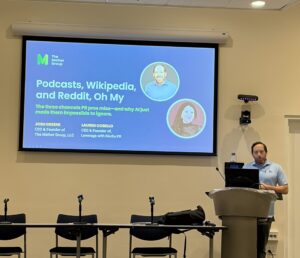
Wikipedia is one of the sources AI relies on most, according to speaker Josh Greene, CEO of The Mather Group. If you spot an error on a business Wikipedia page, it’s best to not edit it yourself. Instead, open the “talk page” and ask the volunteer editors who monitor it to make the change. Linking to coverage from a reputable news outlet gives them the evidence they need.
Telling stories and measuring what matters
Earned media shapes what AI and audiences see. As AI speeds up content production, the business and nonprofit news landscape is getting more crowded. Standing out and providing new insight still takes human research, experience and curiosity.
Owned channels give organizations more control. Social media and websites let organizations share their message directly rather than leaving it to a reporter to decide what to include. Video that centers people, lived experiences and humor is especially engaging. Reddit is another way to dive into niche topics and connect with communities you might not otherwise reach.
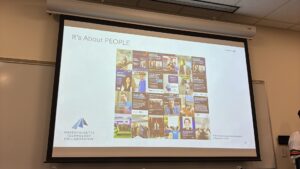
Partners can help carry the message too. At Teak Media, we often create partner toolkits that make it easy for companies and supporters to share an organization’s information accurately and consistently on their social media channels, newsletters and websites.
Measurement shows the impact communications efforts deliver. Including a “How did you hear about us?” question on forms and trackable links that appear only in press releases can show which stories drove sign-ups, donations and purchases.
AI will keep changing, but the fundamentals of good PR remain the same: listen first, tell real stories and keep people at the center. The communicators who get the most out of AI will be those who stay in the driver’s seat, check its work and apply their own judgment.
