

For nonprofit communicators looking to build lasting relationships with younger supporters, understanding Gen Z isn’t just about jumping on the latest TikTok trend. It’s about authenticity, community and creating meaningful connections that can transform today’s engaged followers into tomorrow’s dedicated donors and volunteers.
Teak staff members recently attended Northeastern University’s Social Media Summit where we learned tips from some of the top local social media managers and influencers on how to reach Gen Z audiences.
Authenticity Over Trends
Gen Z has an eye for authenticity. Being insincere or fake is a turn-off. While it might be tempting to insert your organization into every trendy moment on social media, Haley Martin, Director of Social and Brand Communications for Culture Pop Soda, cautioned against chasing relevance without a purpose. Understand what you’re trying to achieve. Trendy moments can contribute to your overall brand personality, but they don’t always translate to real-world impact like increased donations, volunteer sign-ups or sustained interest beyond social media. The key is being selective and strategic about which conversations your nonprofit joins, ensuring they align with your mission and values. Resist the urge to simply seek out viral moments.
Community Creates Connection
Community is everything to Gen Z. This generation wants to feel connected to the people behind the brand and the causes they support, and that connection inspires genuine brand loyalty.
Martin emphasized the importance of regularly engaging with your community and showing the faces of leadership within the organization. People don’t want to feel like they are being sold to. One helpful exercise Martin shared was, “if your brand were a person, who would it be?” This framework helps nonprofits humanize their presence and communicate in a way that feels genuine rather than transactional. It also gives nonprofits an audience they can speak to and understand, rather than creating inconsistent content that tries to randomly grab attention.
Know Your North Star Follower
Emily Schario, Head of Content at B-Side, stressed the importance of defining exactly who you’re speaking to on social media. “If you try to talk to everybody, you talk to nobody,” Schario noted. She encourages organizations to envision the physical person and personality behind their ideal audience member. Schario showed an image and description of the “North Star follower” of B-Side. She lives in Brighton, MA, is between the ages of 24-30 and enjoys finding things to do in the city. This fictional persona is the “prime example of an audience member,” she said and helps Schario and the B-Side social team determine what to post and share as well as the humor and cultural moments to reference in their video and newsletter content.
Your audience wants to feel like you’re communicating directly with them, which means nonprofits need to be comfortable focusing on the audiences that matter most to their mission. Who are you speaking to? This decision controls your main audience and, consequently, your entire communication style.
Beyond defining your brand personality, Schario emphasizes creating a recognizable social media presence. A repeatable format combined with good content results in consistency and a pattern that audiences can identify and return to. This predictability doesn’t mean being boring, it means creating a reliable experience that your community can count on.
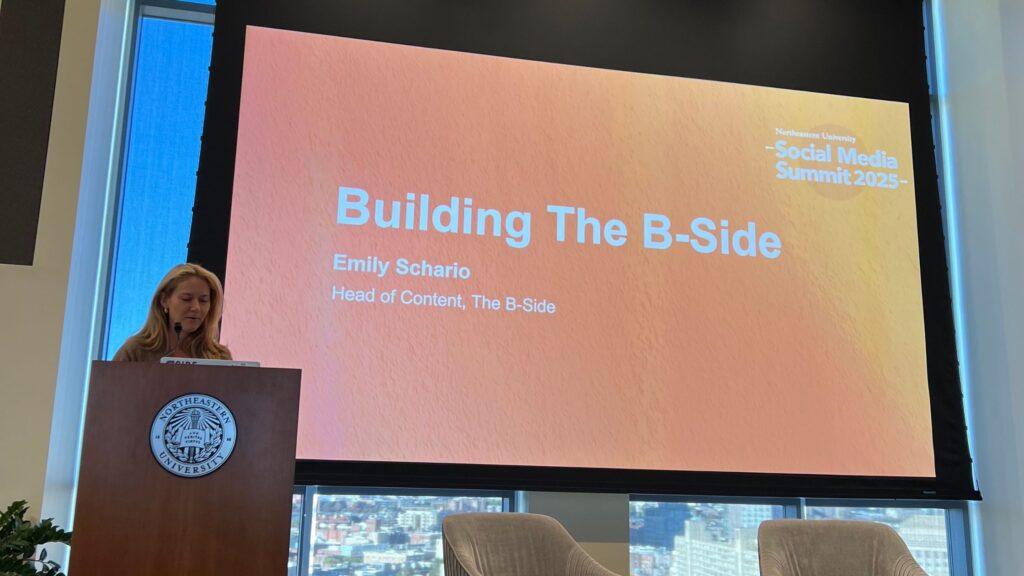
Emily Schario, Head of Content at B-Side presenting at the 2025 Northeastern University Social Media Summit. Photo by Hayley McManus.
The Long-Term Investment
After listening to speakers discuss the results they hope to achieve from social media, the overall consensus was that the payoff for reaching younger adult audiences goes beyond immediate metrics. Cathleen Cusachs, Digital Marketing Manager for GBH and head of social media for the children’s show “Arthur” shared that the point of creating Arthur posts on TikTok for example is not to target children and increase viewership, but to feed the nostalgic urges of young adults who grew up with Arthur. The goal is to engage with Gen Z in a genuine way. When you connect authentically with young adult audiences, you’re priming them to become long-time supporters of your organization. While they may initially show support through social media engagement, likes, shares and comments, with time and continued relationship-building, these young followers can evolve into future donors, dedicated volunteers and passionate advocates for your cause. Investing in engagement today means cultivating the next generation of supporters who will carry your mission forward for years to come.
Connecting with Gen Z requires nonprofit communicators to prioritize authenticity over performative participation, foster genuine community connections, clearly define their target audience and maintain a consistent, recognizable presence. By focusing on these fundamentals, nonprofits can build meaningful relationships with younger audiences that extend far beyond social media.
