

Six months in, there are a growing number of examples of the second Trump Administration lashing out at news and even entertainment content they perceive to be unfriendly, raising questions about whether freedom of speech itself is the true target.
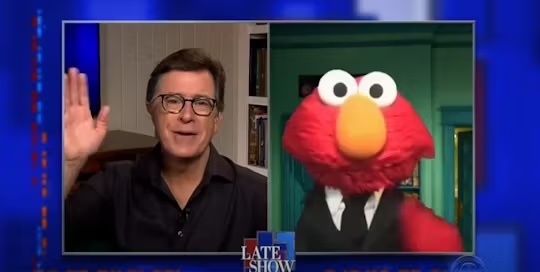
The Late Show With Stephen Colbert/YouTube
On Thursday July 17, Stephen Colbert unexpectedly announced his CBS late night comedy show Late Show with Stephen Colbert is ending in May of 2026. This will end both Colbert’s decade long tenure as host and the show’s more than 33 year run. CBS’ owner Paramount needs FCC approval to sell the Tiffany network to Skydance. CBS leadership said the move was done for purely financial reasons. The timing of the announcement just days after Colbert called the network’s $16M settlement of the 60 Minutes lawsuit a “big fat bribe” on his show, raised about a million sets of eyebrows, so much so that the Writers’ Guild of America is calling for New York’s Attorney General to investigate. President Trump reacted by sending out a celebratory post that hinted another late night host critical of the administration Jimmy Kimmel could be next. Several late night hosts including Jimmy Fallon and Seth Myers were in the audience for the taping of Colbert’s show Monday. On his own show on the Paramount owned Comedy Central, Jon Stewart gave a scathing monologue about the firing saying, “I’m not giving in. I’m not going anywhere …. I think.”
Meanwhile the Trump Administration is suing The Wall Street Journal and owner Rupert Murdock for $20B (that’s billion with a B) over a July 17 article that claimed Trump sent Jeffrey Epstein a suggestive 50th birthday letter in 2003 that included a bawdy drawing allegedly drafted by the President himself. To win his legal battle as a public figure, the President would have to prove actual malice – not only is the information in the story false, but the Wall Street Journal knew it was false and ran it anyway. The administration also removed the Wall Street Journal from the pool of reporters covering the President’s upcoming trip to Scotland.
It’s not just content that is in question – it’s distribution as well. Congress voted to strip more than $1B in federal funding from the Corporation for Public Broadcasting, which helps fund NPR and PBS. The Trump administration praised the move, saying funding what they claim are “partisan left wing outlets” is a waste of taxpayer money. While not a fatal blow (2% of NPR’s budget and 15% of the PBS budget comes from government funding), it will impact programming and lead to the loss of jobs in an already shrinking media landscape. Critics fear rural stations will be the first to close, endangering the three-quarters of viewers and listeners who rely on them for alerts and safety news information, according to NPR’s CEO Katherine Maher. Senator Mike Rounds (R-SD) was able to negotiate an exception for 28 stations on Native American reservations.
The move comes at a precarious time for journalists, who are departing the field in droves both voluntarily and through layoffs. The most recent being Washington Post stalwart Jonathan Capehart and NPR Editor in Chief Edith Chapin. According to a recent Muck Rack report, there has been a 75% drop in journalists since 2002 leaving more than a thousand counties (one out of three for those keeping score) without a full time journalist. Without journalists there is no one to hold public figures accountable and no one to cover the meetings, projects, businesses, and events that shape our hometowns and impact our lives.
So what does this mean for the future of journalism and PR? Although finding a safe harbor for PR pitches can be like steering a boat through a storm using a map that keeps changing, there are some signs of hope and action. PBS and NPR stations are raising money. One station in Louisville raised $444,000 in one day. A new app, “Adopt a station,” enables free media enthusiasts to direct their donations to a station that has lost more than 50% of its revenue. The philanthropic coalition Press Forward recently gave out $22.7M in grants to 22 newsroom projects.
In March the Supreme Court declined to take a case involving Trump ally Steve Wynn that could have challenged defamation standards. Five American press freedom organizations recently launched the Journalist Assistance Network to support journalists and newsrooms in the U.S. with safety resources and training. And it is comforting that Rupert Murdoch, the owner of both Trump friendly FOX News and the Wall Street Journal is not backing down from a legal battle with President Trump … at least for now.
We can all support journalism by continuing to follow the news, subscribing to local newspapers, donating to NPR and PBS stations, and not turning away from what is happening. PR professionals can keep pitching stories of impact and making the effort to find and reach media outlets. Silence and indifference are not an option.
Header image from: The Late Show With Stephen Colbert/YouTube
