

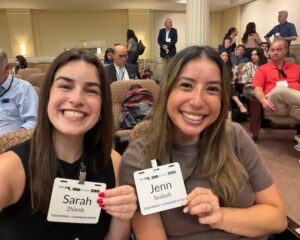
The shrinking media landscape means that nonprofit communicators seek to earn media coverage from fewer reporters who are increasingly covering more ground. Last week, a few of my Teak colleagues and I joined reporters and communications professionals at Meet the Media 2026, the fourth annual gathering hosted by the State House News Service and MASSterList, in partnership with Axios Boston and Commonwealth Beacon. The morning brought together some of the most influential political and business reporters in Massachusetts, including the Boston Globe’s Power Play duo Shirley Leung and Jon Chesto, moderator Jon Keller of MASSterList, and a reporter roundtable featuring Axios Boston’s Mike Deehan, GBH News Rooted’s Paris Alston, Commonwealth Beacon’s Laura Colarusso, NBC10 Boston’s Matt Prichard and MASSterList’s Katie Lannan.
Here are a few pitching tips that they shared that we think matters most for our clients.
AI media pitches are getting easier for reporters to spot
The panel’s most candid moment came during a discussion of AI in daily reporting. Matt Prichard uses AI transcription tools to move faster through interviews, but has caught AI-generated search summaries stating flatly incorrect information. In one case AI attributed provisions to a federal bill that weren’t actually in the text. Paris Alston said she can now recognize when her staff’s talking points were drafted by ChatGPT because the phrasing has become so uniform. For under-resourced nonprofit comms teams, the temptation to lean on AI for pitches and statements is real, but reporters are trained to spot the tell. Whatever tools you use, make sure the final version still sounds like a person who understands the material.
Pitching smaller newsrooms means precision is more important than volume
Every reporter on the panel hates receiving pitches that clearly weren’t written for them. Prichard put it bluntly, noting he can’t do a story on the 12 best foods for summer because he covers politics. That lack of precision can be costly for a nonprofit competing against every other cause-driven pitch in a crowded inbox. Teak spends the time researching the right reporters and personalizes pitches accordingly. It’s a small step that meaningfully increases the odds of a response. With fewer reporters covering more beats, a generic pitch is more likely to be ignored outright than passed along to the right person. The errant pitch also discredits its sender and diminishes the potential for a positive future relationship.
Nonprofit storytelling works best with real people
Prichard’s most useful advice for nonprofits specifically: a pitch becomes far more compelling when it includes people who are personally affected by the issue, not only the executive or program director. That’s the difference between a pitch a reporter has to research and one they can move on immediately. Nonprofits are uniquely positioned here. Unlike a corporate pitch built around a CEO quote, nonprofit stories can reflect the people a program actually serves; a parent, a client, a volunteer. That’s the sourcing reporters said they want most, and it’s worth the extra effort to line someone up before you pitch so you send a complete story idea.
Read the news before you pitch
Katie Lannan was direct about wanting angles that haven’t already been the headline elsewhere, or information that’s days behind the news cycle. Several panelists also flagged a rule of thumb that’s easy to overlook: look at what’s going on in the world. You don’t want to pitch a political reporter on election day, or try to get a camera to an event if there’s a major court case happening. Nonprofits often operate on their own calendar, tied to their own fundraising events, programs, or legislative hearings, but that’s not the same as a reporter’s calendar. Checking news sites, signing up for newsletters, or following reporters’ social media pages can help you know what’s going on. Understanding when a newsroom has bandwidth, and being flexible with timing if possible, is as important as the pitch itself.
A polished quote isn’t always a safe one
A recurring frustration across the reporter roundtable was the non-answer: when a spokesperson responds to a reporter inquiry with a lot of words but doesn’t actually address anything. Prichard and others were candid that they’ll now note directly in a story when a source failed to address the actual question. That matters for nonprofit communicators in particular. Statements from mission-driven organizations often go through several rounds of review can produce language that’s technically accurate but avoids the real question. Reporters are now calling that out in print. A shorter, more direct answer that actually engages with what was asked will serve a client better than a heavily scrubbed one.
Across every panel, the message for nonprofit communicators was consistent: the pitch, the source, and the relationship all have to hold up to real scrutiny from newsrooms that have less time and smaller staffs than ever. The organizations that respect a reporter’s beat, their deadlines and their questions, and that show up with real people rather than talking points, are the ones that earn the coverage.
