

Scotland’s first World Cup appearance in 28 years came with an unexpected bonus for Bostonians. Although they were only in the city for just under two weeks, between the kilts, the bagpipes, and the traffic cones, some 50,000 Scotland fans, known collectively as the “Tartan Army,” taught us some friendly PR lessons. Here are a few takeaways from the time with our Scottish friends about earning attention the right way.
Visual moments get attention and create brand identity
The kilts are proof: something unusual in a sea of sameness makes people take notice. Scotland’s fans didn’t deploy a coordinated strategy, they just showed up looking like nothing else in the city. Their kilts worked like a Tartan Army uniform. It was something authentic to who the Scots are, and it made every one of their fans instantly recognizable in a crowd.
Nonprofits can borrow that same logic with a low cost, wearable marker that turns individual supporters into a visible group. Livestrong’s yellow wristbands are the clearest example: a $1 bracelet that became a cultural marker, worn by millions of people who wanted to visibly show they were backing cancer patients. The Boston Marathon works the same way. Runners in matching charity colors or team singlets are instantly identifiable to spectators as running for a cause, not just for time.
When you’re thinking about how to get people’s attention, ask yourself a simple question first: what would actually catch someone’s eye? Is there a wearable, a color, or a small item that lets your supporters visibly identify as part of your community?
Make it fun, and people want in
People want to be where the party is. Scotland fans sang along at Fenway, rode the Cop Slide while playing bagpipes at City Hall Plaza, and drained beer kegs at bars across the city, and we all noticed.
People enjoy being part of something fun, and that’s true even when the underlying mission is serious. Think about the ALS Ice Bucket Challenge: ALS is a devastating disease, but the campaign gave people a fun, simple way to participate and spread the word, and it raised more money in one summer than through years of traditional fundraising. The same logic applies to a charity walk or run. The cause can be serious. The way people engage with it doesn’t have to be. So ask: is there a way to gamify the mission, or give people something they’d actually want to join in on?
Positivity is contagious
Warmth spreads. Across dozens of clips, influencers and brands asked Scots for their impressions on all sorts of things: Boston, beverage, U.S. culture and their answers landed the same way nearly every time. They were warm, funny, and complimentary. It was their positive, upbeat and humorous style that made people stop scrolling to listen and engage. Negativity might get a click, but warmth is what gets shared, quoted, and remembered. Find ways to be positive, and give people a reason to hope, to feel proud, to feel good.
Know your audience
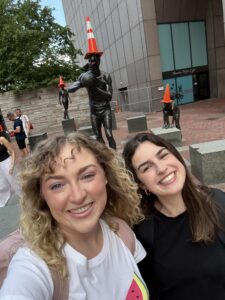
The cone joke has deep roots in Glasgow, where the statue of the Duke of Wellington has worn one since the late 1980s. It’s been removed and replaced so often that locals now consider it part of the statue. Fans brought that tradition to Boston, crowning the Bill Russell statue and others, and the city was receptive right away.
Miami wasn’t. Police intervened when fans tried the identical stunt on a statue in Little Havana, and the clip went viral for the opposite reason. As a host, Boston had done its homework and knew what was coming. That advance knowledge is what kept Boston from having to walk back a response, the way Miami did.

Tone from the top sets the tone for everyone
Boston’s own Mayor Michelle Wu leaned into the Scottish craze early, admitting she placed a cone on Bill Russell’s statue herself. That same day, she ensured the fun vibes would continue past the World Cup by signing a letter of intent to make Boston and Glasgow sister cities, with a formal agreement expected next April. That kind of visible buy-in from leadership signaled to the whole city that this was fair game, and Bostonians followed that lead. Leverage your leadership to set the tone. It lets others, your donors, staff, and volunteers, know what cues to take.
Scotland’s Tartan Army didn’t run a campaign. They just showed up as themselves and Boston loved them for it. That’s the instinct good PR is built on, knowing what will actually resonate before you spend a dollar trying to manufacture it.
